After not having as much time to paint last year as I would have liked due to some home renovations, I came back to the easel feeling out of shape, like my painting process took a step backwards.
While I find there are some aspects of painting that weaken quickly when we stray from our daily practice, there are also a few benefits. I am not a proponent of prolonged breaks, but if they happen, one of the things that slips, along with your familiarity and confidence in your process, are the “bad” habits, or the “habits that are no longer serving your vision”. Over the years that we train our mind and body for painting, that conditioning is not always discretionary. We soak up tips and tricks as we grow, and before we know it we’re using them all the time, they become defining characteristics of our “style”. There’s nothing inherently wrong with this, but it’s important to remember how much good painting is objective observation through our own aesthetic glasses. So, the idea of “bad” habits is just prescribing a method, without truly diagnosing it first.
I see growing as cleaning the lens of these glasses, giving you a little more clarity as you continue to polish the rough edges. So, when you take a break, it’s a way to step back and make sure you have the right prescription.
This speaks to the idea that we can only grow our skills to the extent of our aesthetic taste, or understanding. Some people call this the “hand catching up to the eye”. So, when you come back to the easel after a period of time, your eye has continued to advance its taste and aspiration, but the hand has atrophied. Your hand is remembering how to paint, but it’s not quite as automatic: you take an extra second before you mix that color or pull that familiar stroke. You double check and reassess with new eyes.
For me this process began last year when I stepped away for almost 6 months. When I came back, nothing was feeling quite right. I had a fairly clear idea of what I was looking to achieve in my paintings when I first put paint to canvas, but by the time they were finished, I felt like my habits had betrayed me and I ended up with tired lifeless paintings that were more concerned with “being right” (in terms of copying the reference) and less with making good expressive art.
So, after a summer of plein air painting and struggling to align my old habits and formulas with my new refined visual goals, I decided to set out on a body of work that would advance previously done paintings or subjects that ignited a creative spark, and could be refined further.
I also saw this as an opportunity to take a more exploratory and, at the same time, methodical approach to my process.
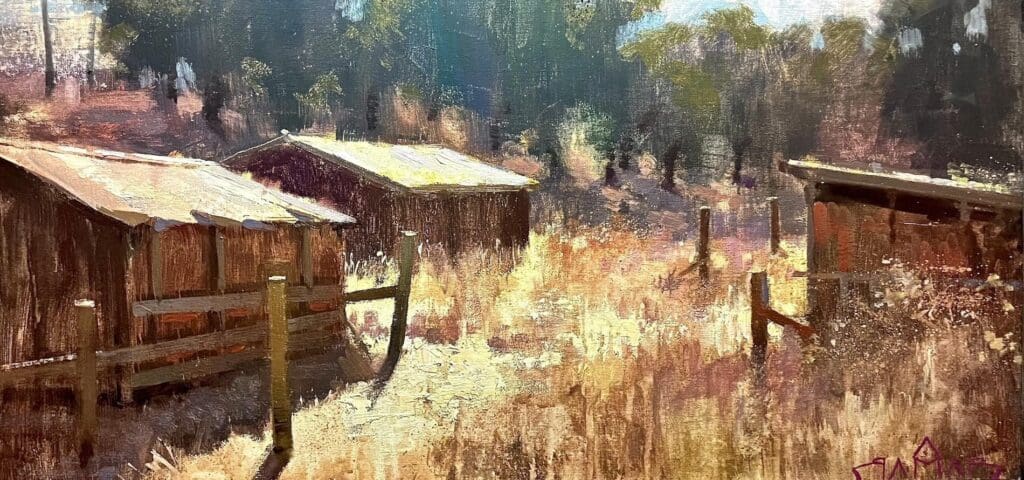
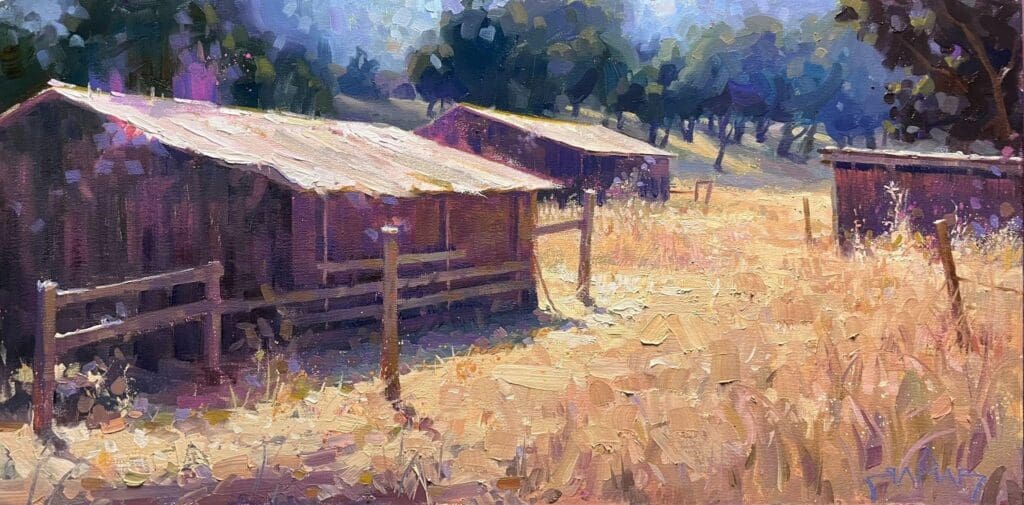
Some paintings, like this one, were plein air pieces that had an ineffable charm that deserved more attention. I did this 12×24 painting in Sonoma, CA last year. When I started it, the light was fading fast, and I knew I was only going to get an hour or so to capture it. I began with “the feeling”…which was atmospheric, weathered and full of lovely texture. The barn shapes were so simple and bold the scene lent itself to a strong, immediate painting method. After an hour and a half, this is what I had. This painting had a much lower render than what I usually try to produce en plein air. But I felt I had successfully captured the scene with my initial impression.
This painting sold quickly and I did not have very much time to enjoy or study it myself…a lucrative tragedy I accept.
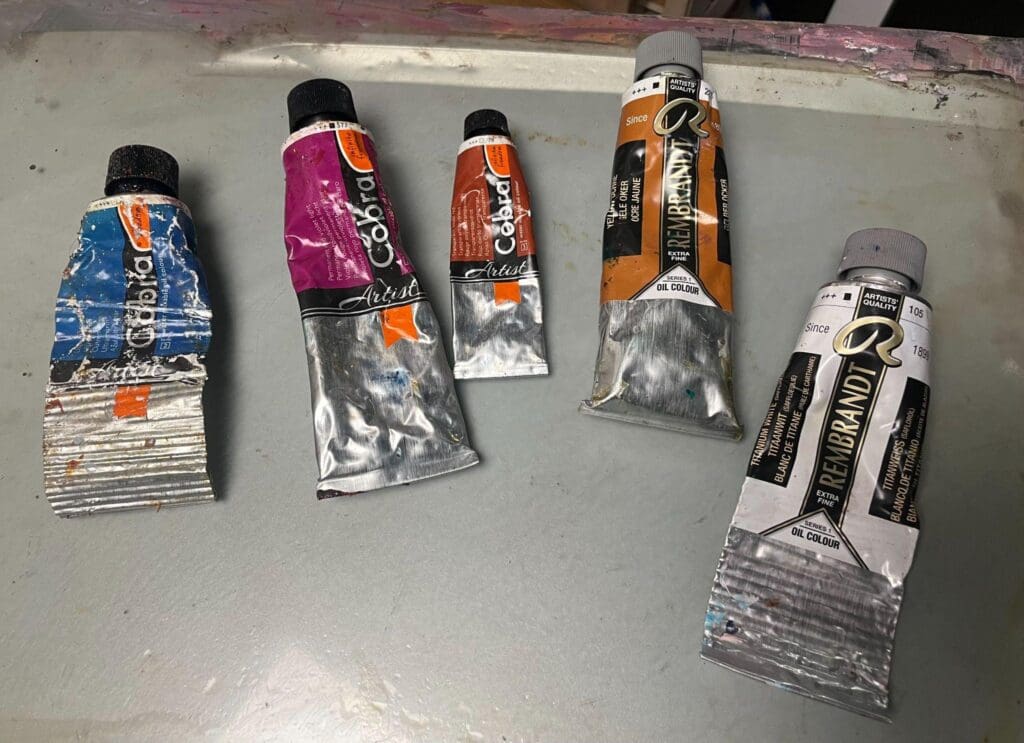
This fall when I decided to explore some of these “paintings that got away”, I gave each one a limited palette color gamut for harmony and simplicity partly because I felt my work was suffering from a slight identity crisis: I usually pride myself on accurate color true to my subject, but then contradict that by trying to exaggerate/enhance mood and drama of the scene. When I think about my inspirations, “realistic” color is pretty low on my list of aspirations for my own work. So, by limiting those options I was able to liberate my process a little more to think about the qualities that really matter to me in my paintings, like mood, design, and mark-making. For this painting I felt like these colors would give me everything I needed to achieve the harmonious goal I had in mind. Most of the paintings I have done in this series have a three-color palette plus white. Transparent red oxide was an addition here to help with some warm darks. Before you ask: No, I don’t exclusively use water mixable oils. I often (as in this case) don’t even add any water to the process. I just had these in the bin and felt the colors would be fitting.
When I started planning this series I went through references and plein air paintings that had a “certain something” and came up with 14 images I wanted to refine. I first did a few scribble thumbnails to explore composition options and get in the ballpark of what the final painting might “feel” like. I then did small postcard value comps in gouache to clarify the design a bit more.
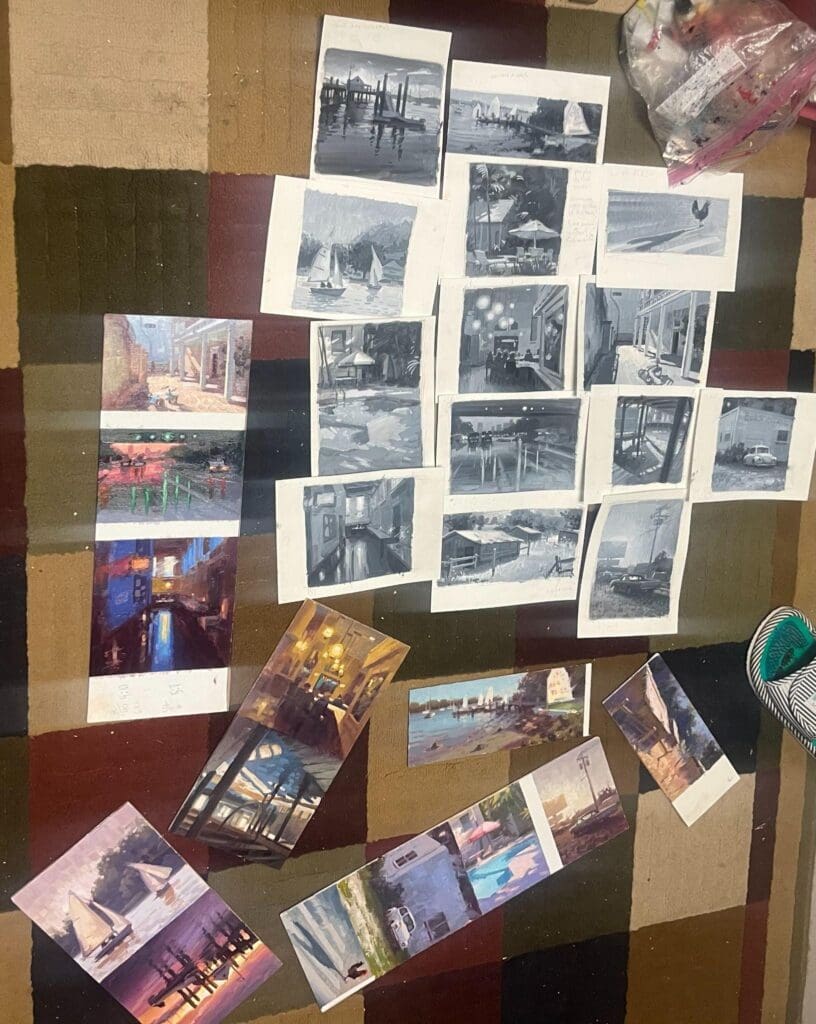
Continuing to shift compositional hierarchy I started to explore the color harmony of this universe, furthering my understanding and giving me yet a little more freedom and confidence for the final painting.
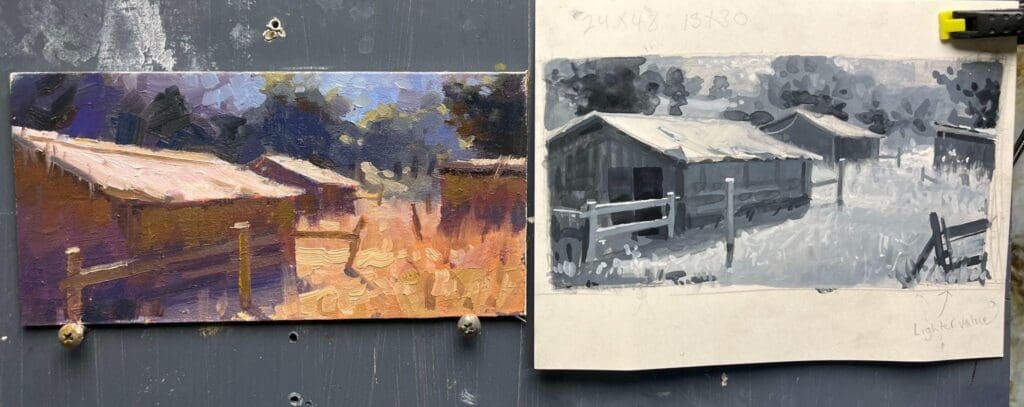
After all these studies I went back to my reference and made notes, mission statements of sorts, of the qualities and their hierarchies I wanted to be legible in the finished painting.
I hung this list next to my easel and glanced at it from time to time throughout the process to make sure I didn’t go astray in the name of vanity. Sometimes we get so smitten with how proficiently we can “render” a passage of paint, we forget to ask if we should. These distractions often become the extras in your movie, wearing a clown nose, walking behind your lead movie star in the climactic scene. – I, for one, have to watch out for these.
“Stable passage” 15×30, oil on canvas.
This is my final painting that continued to evolve and ultimately achieved the vision I might not have seen, but “felt” from its conception. Along with other benefits, the preparatory work gave me the freedom to really lay the paint on thick. Utilizing mark-making techniques that provide the viewer food for thought beyond the literal and pictorial representation.
I share this as my own personal journey in painting this year, hoping it might inspire you to take risks and try something new, to challenge your habits and continue to advance your foresight through insight.
see more of Antwan’s work at Insta: @antwan.ramar Web: www.AntwanRamar.com
Leave a Reply