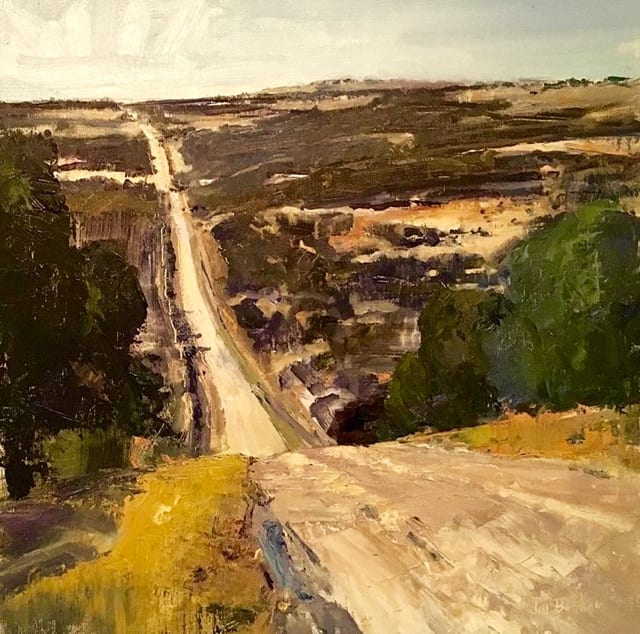
by Jill Basham
22″ x 22″ oil on linen
Painted during En Plein Air Texas
I have a deep love for painting, as I’m sure most of you do as well. It is that passion and sense of discovery that pushes me forward to paint for paintings sake. However, I have gone through struggles of self doubt. I find truth to this quote, “I don’t think there’s any artist of any value who doesn’t doubt what they are doing” -Francis Ford Coppola. This self doubt often occurs when my known or sub-conscious intentions are headed in the wrong direction. What do I mean? Well, for the most part, my paintings are not as successful when created to please others. They may not ring true to my authentic voice. I’m coming to understand that this may be a universal condition for artists, no matter what stage of mastery they fall.
For me this “self doubt” and inclination to paint to appeal to others seems to have the potential to increase during plein air competitions. Don’t get me wrong, I believe I have painted some of my best work at these events! For many reason I enjoy these events, and hope to continue to paint in them. I love to overcome obstacles and challenges, and find avoidance is not the answer. These events require much preparation behind the scenes by the artists attending. Ordering frames, organizing flights, shipping etc…and once on location, it can be a time of pushing one’s abilities and endurance. It becomes not optional to paint in less than ideal weather, or if you are lagging physically or mentally. But I still choose to take part. As an artist, it’s awesome to paint in new locations and meet some wonderful people! Yes, plein air events may seem at odds with an artists philosophy… to make it a competition, yet I think the competition has the potential to be a good thing. It can bring recognition to a previously less known artist. Artists push their abilities and collectors may get some of the artist’s best work this way. In addition, the organizers of the event are able to connect collectors with artists and at the same time generate funding for their particular cause.
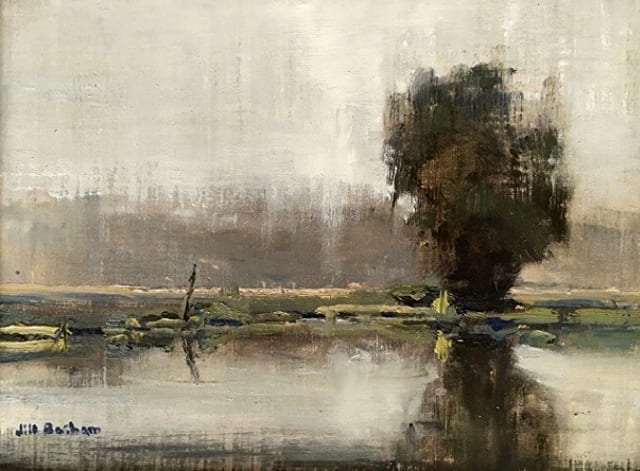
by Jill Basham
9″ x 12″ oil on linen
Painted during Plein Air Easton
I encourage others to push forward and paint with passion and conviction, whether in a competition or not. Paint for yourself, paint with your soul, paint with fearlessness, paint for the love of it.
Uncategorized
Becoming A Better Realist Painter Through Abstraction
I’ve heard it said by more than a few realist artists that they have no connection to abstract art. It’s not their thing, they don’t get it, it’s not real art, etc. Of course, everyone is entitled to their opinion, but I believe that some of these artists are missing out on addressing a key component of individuality in painting; trust. I teach abstract painting for this very reason.
The goal is not to convert realist painters into abstract ones but to help the artists think about what paint can do if you let it by employing dynamic symmetry, hierarchy, division of space, edge, paint handling and color relationships without basing it on a source. Painting abstractly has helped my realist work grow in leaps and bounds. And to date, after 25 plus years of teaching, no one has jumped ship from their existing path, they expand their visual language and take the lessons to fold back into their process.
To build trust in one’s own process is to enable the unique voice of the artist. This voice is comprised of some combination of the key characteristics of painting; intent, drawing, value, color, edge, paint handling, mark making, composition, line, narrative and about 10 other devices in the painter’s tool kit. It’s why there are so many wings at the Metropolitan Museum of Art. Lots of unique voices in art equal lots of wings in lots of museums. And who do we go to see when visiting such places? Those artists who exhibit that trust, that faith in their own vision, the pioneers, the masters of hand and medium. We seek those who are empowered by authenticity.
I mean, let’s face it, if everyone painted the exact same way, it’d be pretty dang boring.
Key to trust building is to venture out past the comfortable known areas of process and concept and hang out on the thin branches for a while. You’d think it would be easy for artists to do this, because what’s the worst that could happen? But, surprisingly, it’s not. The realist regimen incorporates a series of control measures to ensure a fair amount of accuracy: Get your drawing right, get your values right, put something on the thirds cross-hairs, mix the paints just so… all to beautiful effect. Control on the front end.
Abstract painting is that only backwards, the control is on the back end. Which means higher risk and higher failure rates and that can be uncomfortable. But the process of doing, even on a small scale, teaches an enormous amount about what paint can do independent of subject or content in a painting. As part of a healthy aesthetic training program, it’s sort of like taking a day to do Argentine Tango if you are more of a Viennese waltz kind of a person.
I could rattle off a ton of realist deities whose work dances with the abstract: N. Fechin, C. Anderson, J. Sorolla, C. Monet, J. Twachtman, E.C. Fortune, G. Klimt, E. Dickenson, T. H. Benton, T. Thompson, B. Dugarzhapov and so on. If you put realist painting on the same spectrum as abstract painting, some of these artists are just a little closer to one end than the other.
So, what’s to be gained from this kind of exploration?
• It gets you unstuck in a hurry.
• Enhances creative thinking skills.
• Enhances critical thinking skills.
• More paint handling ideas.
• A better understanding of what the components of painting can do.
• More adventurous compositional ideas.
• Your significant other will find you more attractive.
• You will loosen up just a little bit.
• Your back won’t hurt as much.
Don’t hold me to all of those but at least a few will happen.
Let’s say that you are at least moderately intrigued. What next? How does one do this kind of playful study? The doing it part is pretty easy, it’s the brain part that you have to deal with. There are several secrets to getting your brain to go along with the plan because we are creatures of habit and change is not always easy.
• Give yourself permission to play.
• Spend a few hours making shapes on canvas with a brush and one color. Make compositional shape ideas.
• Change your approach. Change your materials, your brushes, tape canvases into quarters to disable the perfectionist feature.
• Work out from a reference source (see ink and wash sketches), put the reference source away and paint from the sketches. Repeat.
• Mix up some large piles of color that you love and just start moving it around. Come back in an hour or two and work on refining the paint into interesting compositions.
• Hide them away for a while. Just be like Dr. Frankenstein and keep your creations in the cellar.
If you ever feel a little stuck or bored with yourself, this is as good a cure as I’ve found. And don’t worry, you won’t suddenly start wearing a rainbow wig or anything weird. But, trust me, you will learn something new about yourself. If you want to know more about really digging deeper, I can recommend a darn good book.
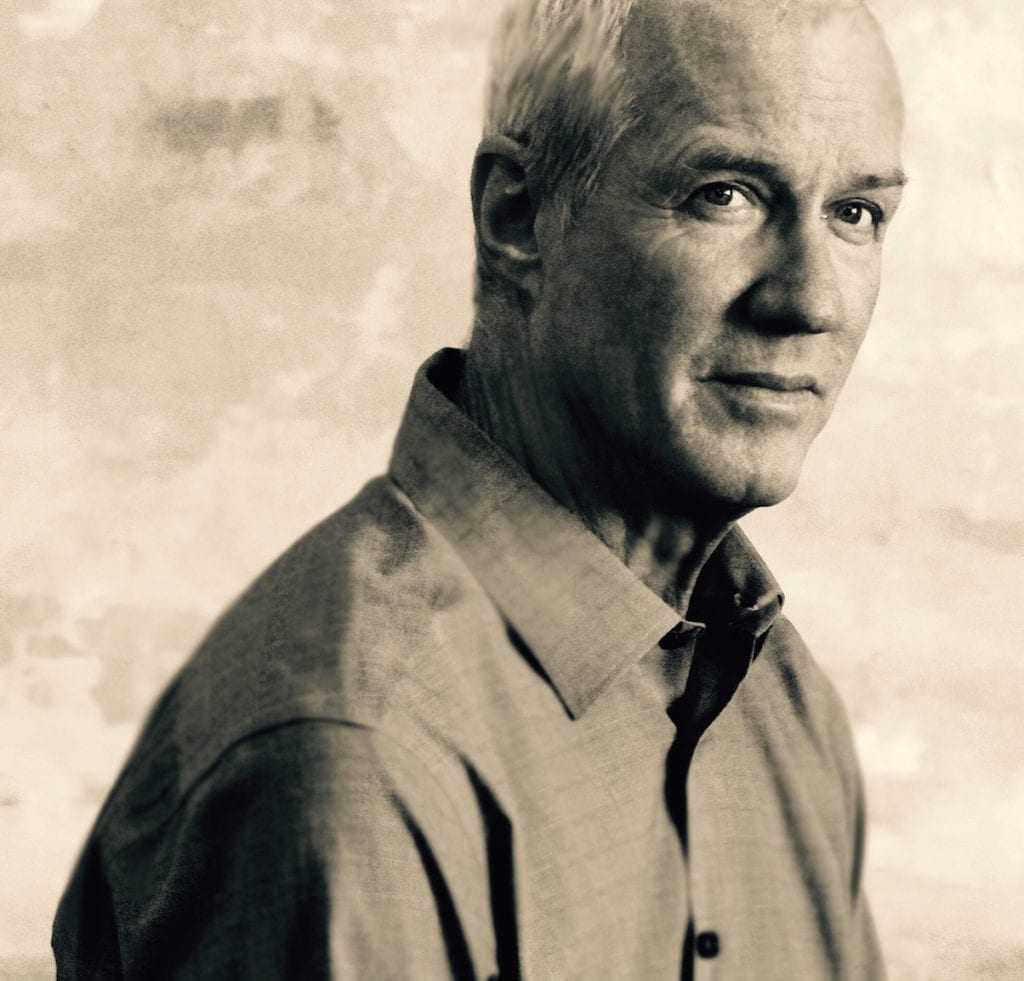
About Larry Moore
Artist, author, instructor, illustrator.
Larry has been a college and workshop instructor for nearly 30 years. From winning a Gold Medal at the Society of Illustrators in New York, to winning Best of Show in national plein air invitationals, inclusion in Society of Illustrators annuals, and Communication Arts design and illustration annuals, he’s employed and refined the essential creative process you’ll read about in his book on creative thinking, Fishing for Elephants. Insights and exercises to develop authentic creativity. Available on Amazon.com.
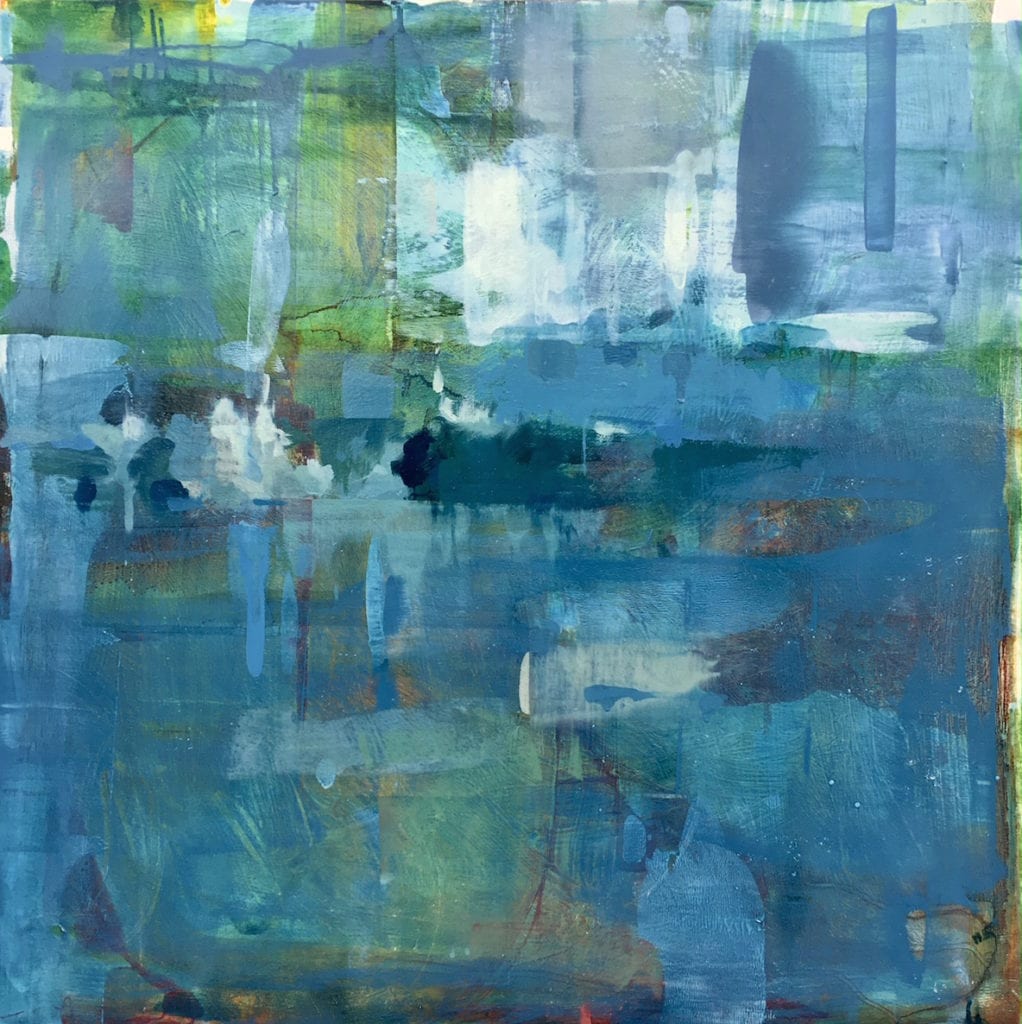
by Larry Moore
24″ x 24″ oil on wood
A little playful exploration in color building.
by Larry Moore
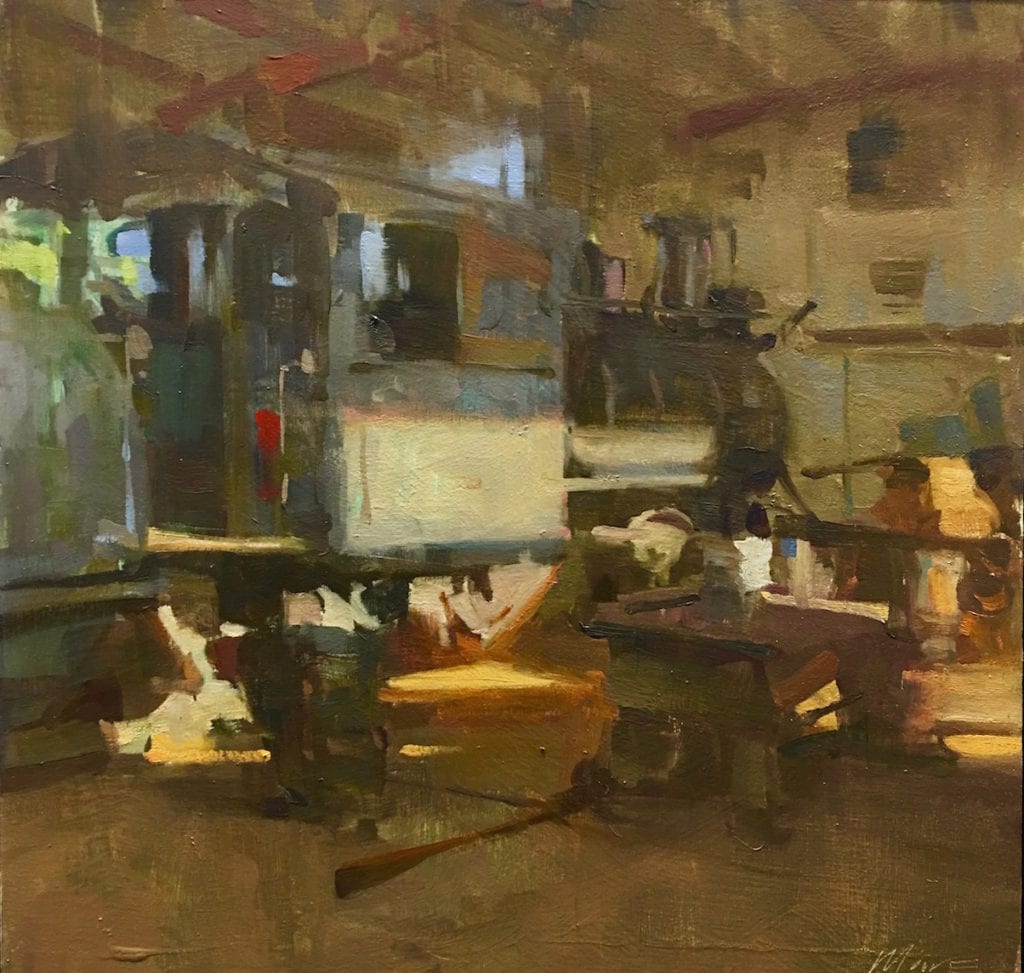
by Larry Moore
16″ x 16″ oil on wood
Painted on-site in Maui, Hi
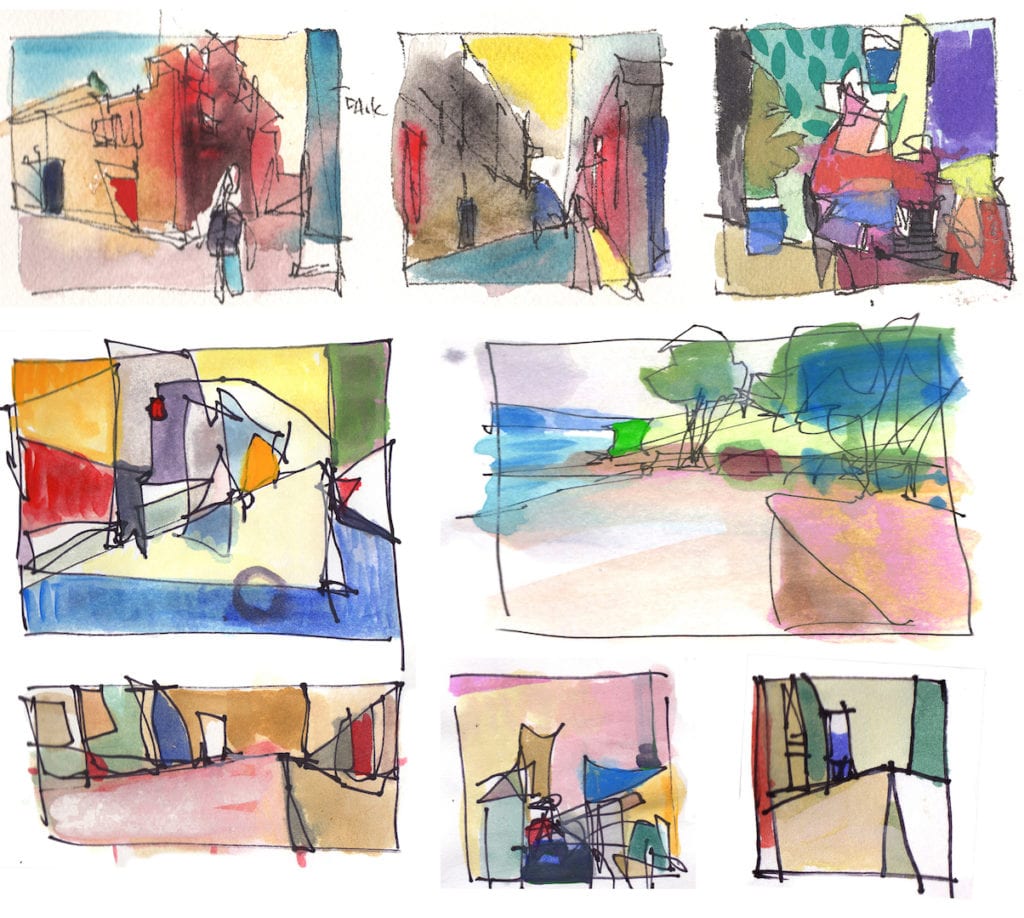
by Larry Moore
A don’t-pick-your-pen-up drawing continuous line style that changes the way you draw and think. Color is added either from memory or randomly.
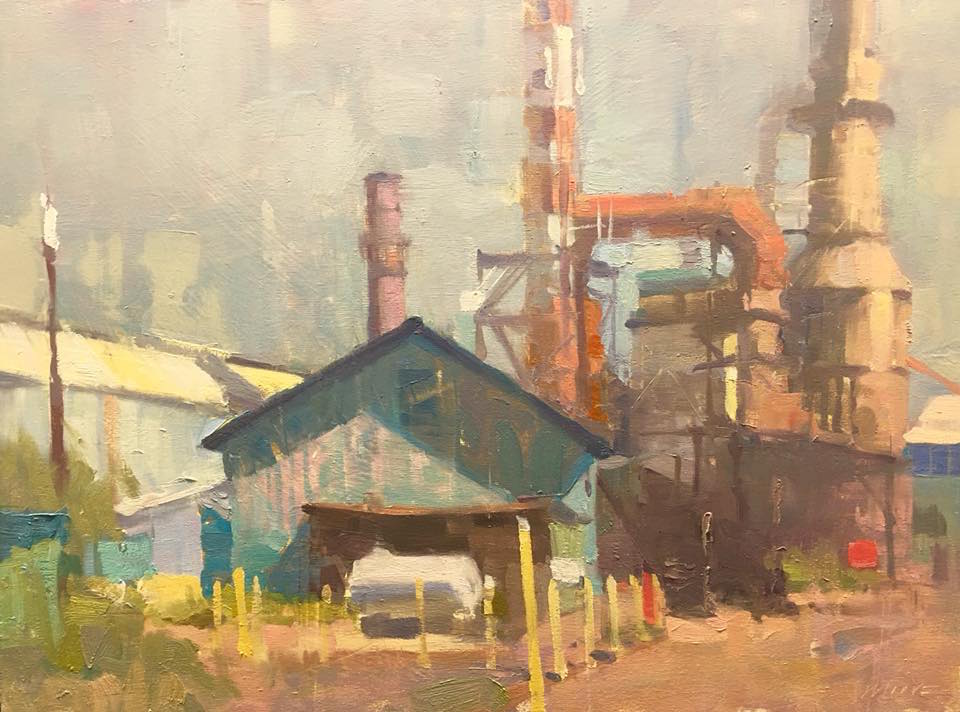
by Larry Moore
24″ x 20″ oil on wood
An old sugar mill, painted on site in Maui, Hi.
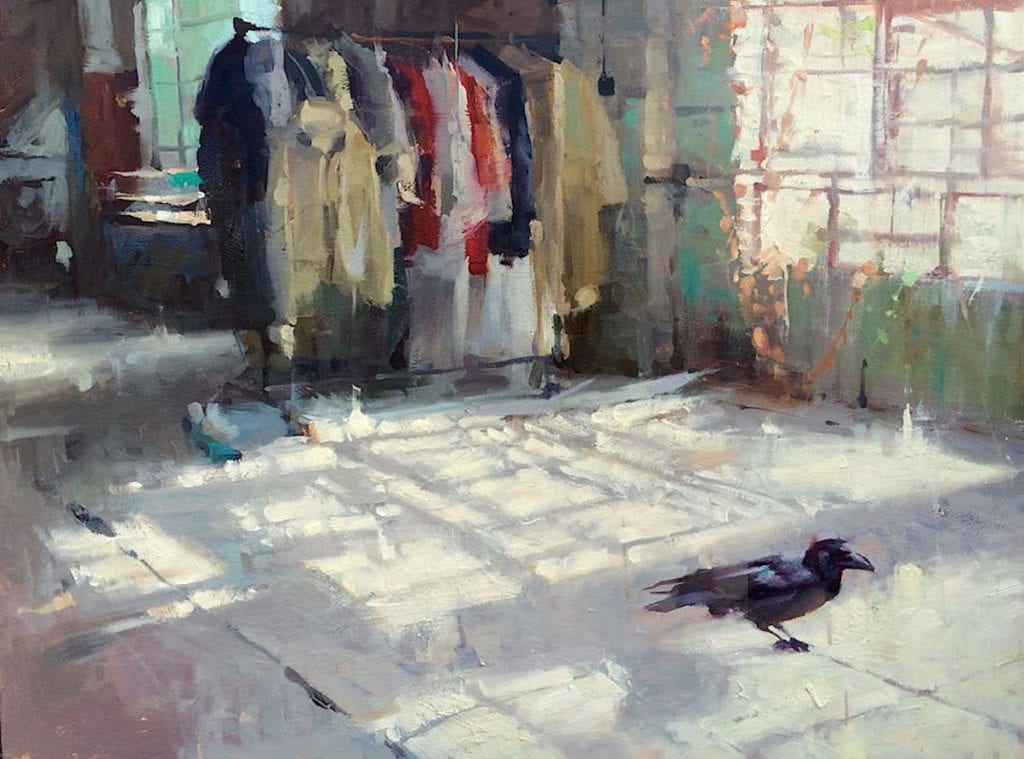
by Larry Moore
30″ x 40″ oil on wood
One of the very first in the Intrusion series. A wonderful playground for new ways to build paint and come at narrative ideas in different ways.
Building Art Communities – Creating Collaborative Circles
I am fascinated by group dynamics and how being a part of a group can lead you to accomplish more, feel more connected, and be more successful. Why do groups of ordinary people create a performance far beyond the sum of their individual skills? How can we as artists create collaborative groups to help us further our skill level and improve our mental outlook? How do we build art communities?
What is a collaborative circle? In Michael Farrell’s book Collaborative Circles, he states that collaborative circles usually begin as a casual association among acquaintances working in the same discipline. Members of a social network meet and find they enjoy one another’s company. Most circles consist of a core group that meet frequently, and a peripheral extended group who vary in their degree of involvement. Some examples of these successful groups are: Kandisky and the Bleu Rider Group, Freud and his early collaborators, John Steinbeck and his Pacific Grove circle and C.S. Lewis, J. R.R Tolkien and the Inklings.
One of the collaborative groups that strikes me is the group of impressionists that included Monet, Renoir, Bazille & Sisley. Monet was the leader of this group. This core group interacted more frequently, and they began to piece together the insights that crystalized a new vision of what art should be. Peripheral members of this group were Degas, Cezzane, Manet, and Pissarro. Berthe Morisot was considered part of this group, but was not allowed to attend meetings due to her gender. Each member of the group had their strengths and all were willing to share their expertise with each other. One of the incredible benefits of this collaborative group was the start of plein air painting.
In 1894, Monet’s working studio was closed and he persuaded the group to paint plein air. Outdoor painting was not approved by the academy members, and Monet, the most rebellious member, encouraged the group to try this forbidden activity. This core group went through many trials and many rejections from the Salons and the Academy, but stayed together to share an artistic vision. Farrell explains that “towards the end of their group’s life together, Monet and Renoir ended up painting alongside each other the most. They painted boats and swimmers and began to experiment with using sharply contrasting, unmixed color to give the effect of shimmering life on the water that no one else had achieved before. It enabled them to portray the transitory effects of light and atmosphere–goals they had been pursuing for years. These men arrived at their artistic vision by commenting on each other’s work, experimenting, making mistakes –it is unlikely that they would have discovered this new style alone.”
How incredible would it be to be part of a group like this?! What are the characteristics that make a great group? In Daniel Coyle’s book “The Culture Code,” he talks about three primary attributes that make strong groups:
1. Building safety–exploring how signals of connection generate bonds of belonging and identity
2. Sharing vulnerability–how mutual risk drives trusting cooperation
3. Establishing purpose–creating shared goals and values.
Monet, Renoir, Bazille and Silsey had all three of these attributes working in their group.
Successful groups also view themselves as a family, and have distinct patterns of interactions. These interactions include a profuse amount of eye contact, physical touch (handshakes, hugs), high level mixing–everyone talks to everyone–lots of questions, humor & laughter, and intensive active listening, in essence, chemistry. Where can we find these types of groups in our own communities?
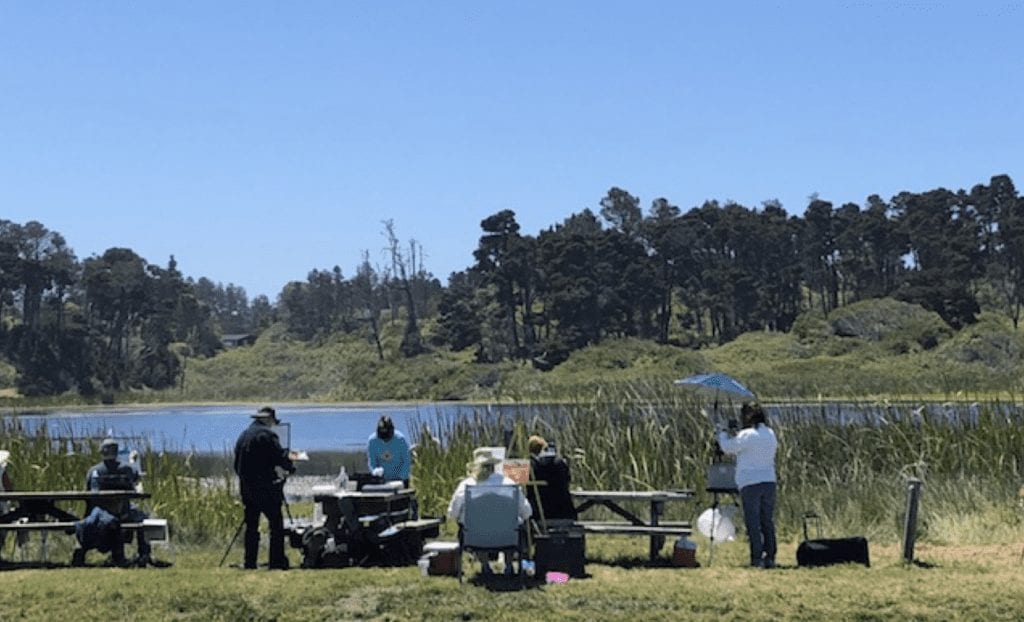
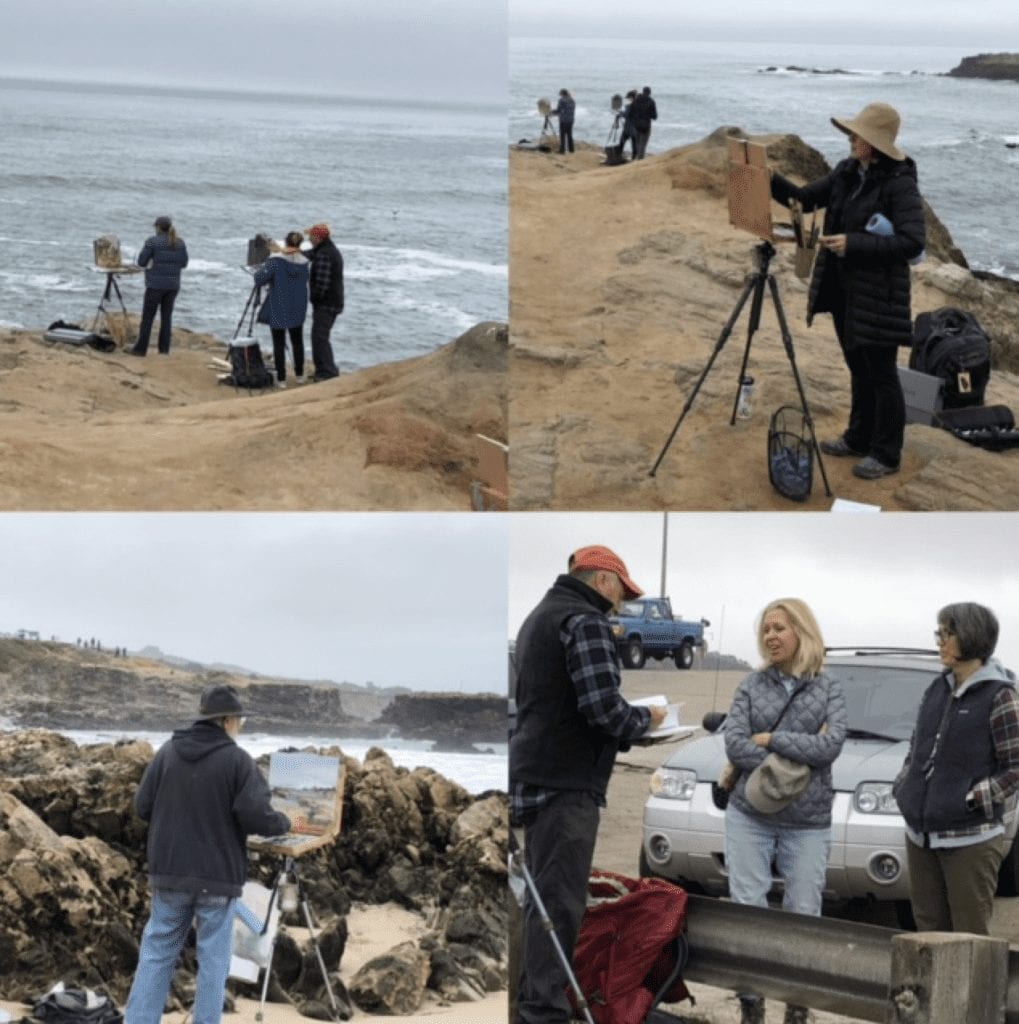
I just finished teaching a 3 day workshop in Mendocino at the Mendocino Art Center, and as I reflect back on this experience I can see that my group shared these three attributes for our short time together–we had chemistry. My class had 12 students, all coming from vastly different backgrounds, ages, and skill levels. The first day we did introductions and talked about our background and art experience. My focus was on building common knowledge to start creating the groundwork for a sense of safety. I also showed many examples of my Mendocino sketches and paintings to the class. I was very open and showed them not only my successful sketches and paintings, but also my unsuccessful work. In an attempt to build vulnerability, I tried to explain why one sketch/painting turned out more successfully than another. Lastly, I stressed to the group what our three goals in the workshop were: drawing a thumbnail sketch before each painting, connecting the lights and darks in the composition, and concentrating on their focal point. Focusing on these three goals helped to establish the group’s purpose. I sensed my group of students felt safe, were willing to be vulnerable with each other, and strive for these mutual goals. It was amazing to me how much laughter and comradery we shared in such a short amount of time. When I look at the list of attributes of successful groups I can see my group scored high on mixing, asking lots of questions, and enjoying humor and laughter. I believe that because of these things, each of my students painted better, and felt like a member of a connected group. It is my hope that this class may cause some ‘spin off’ collaborative circles, much as a pebble creates multiple rings in water.
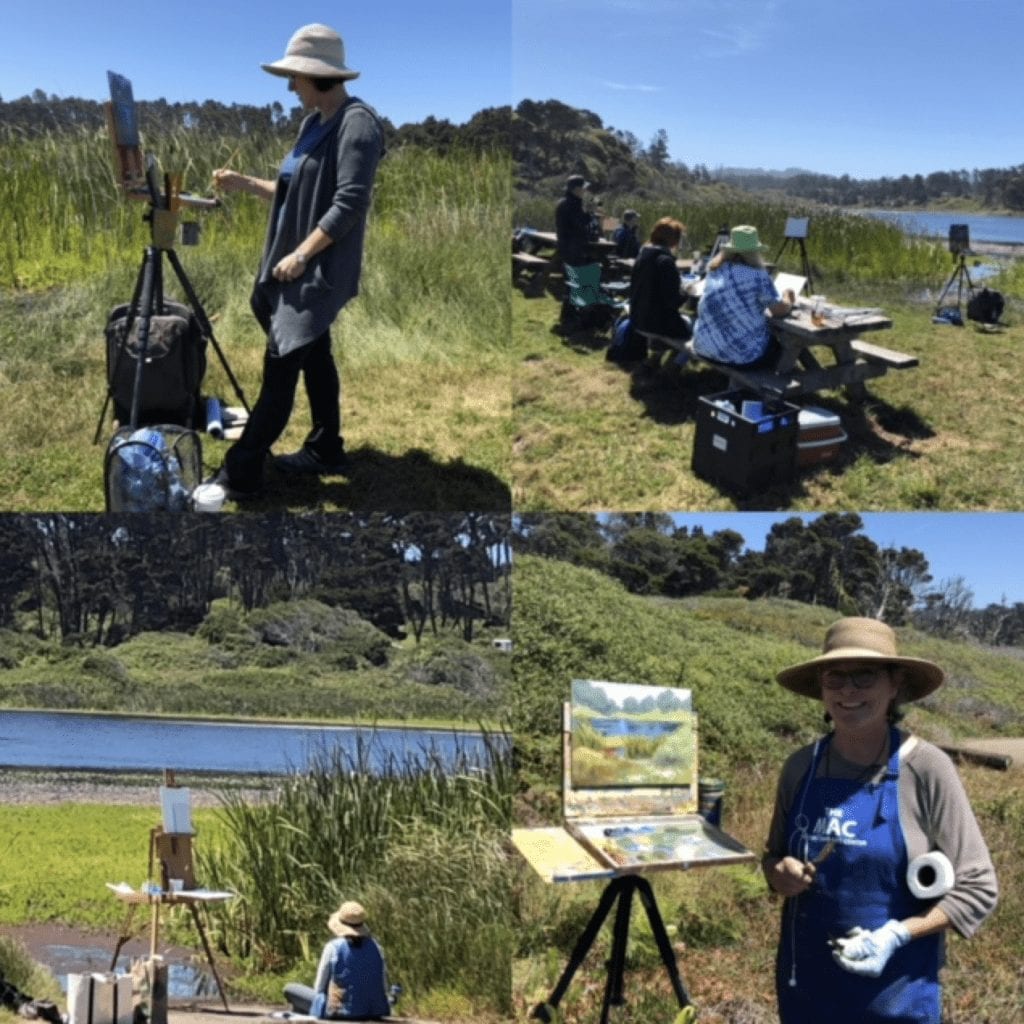
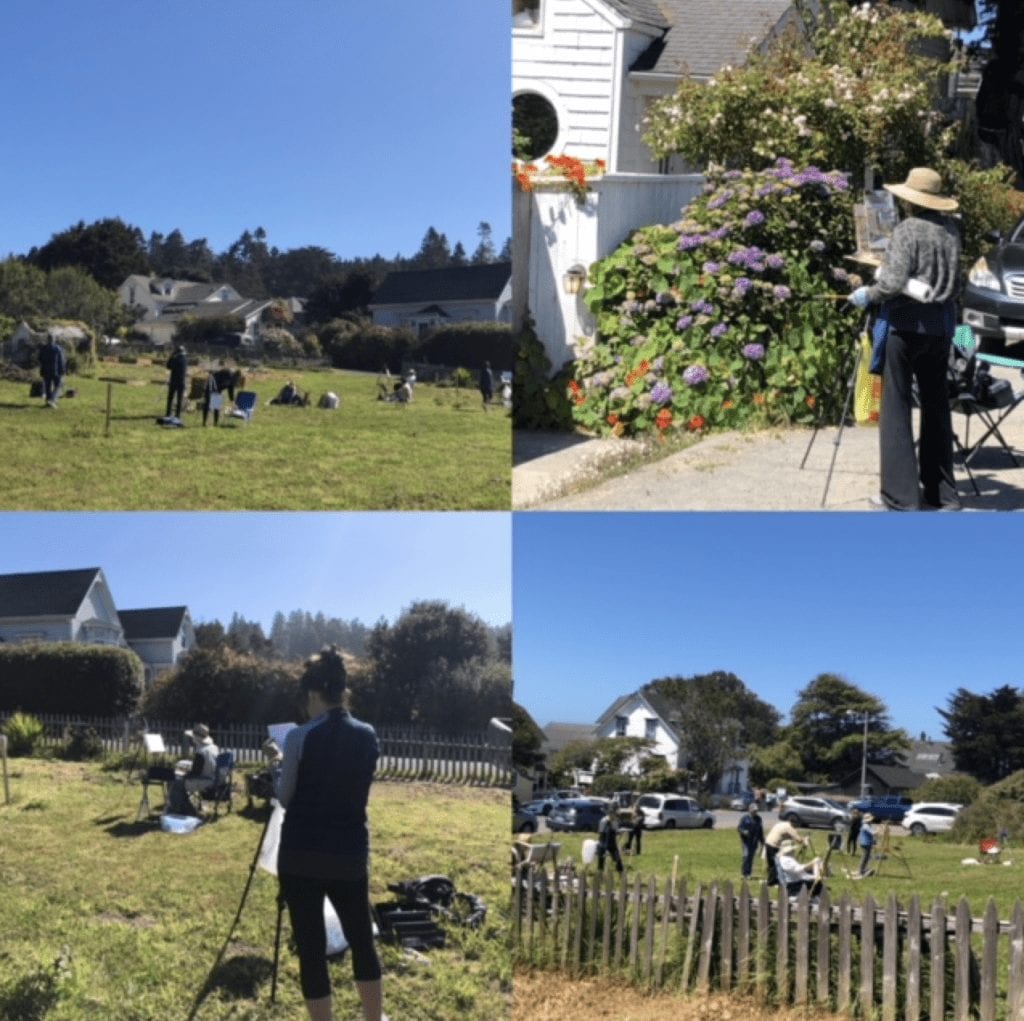
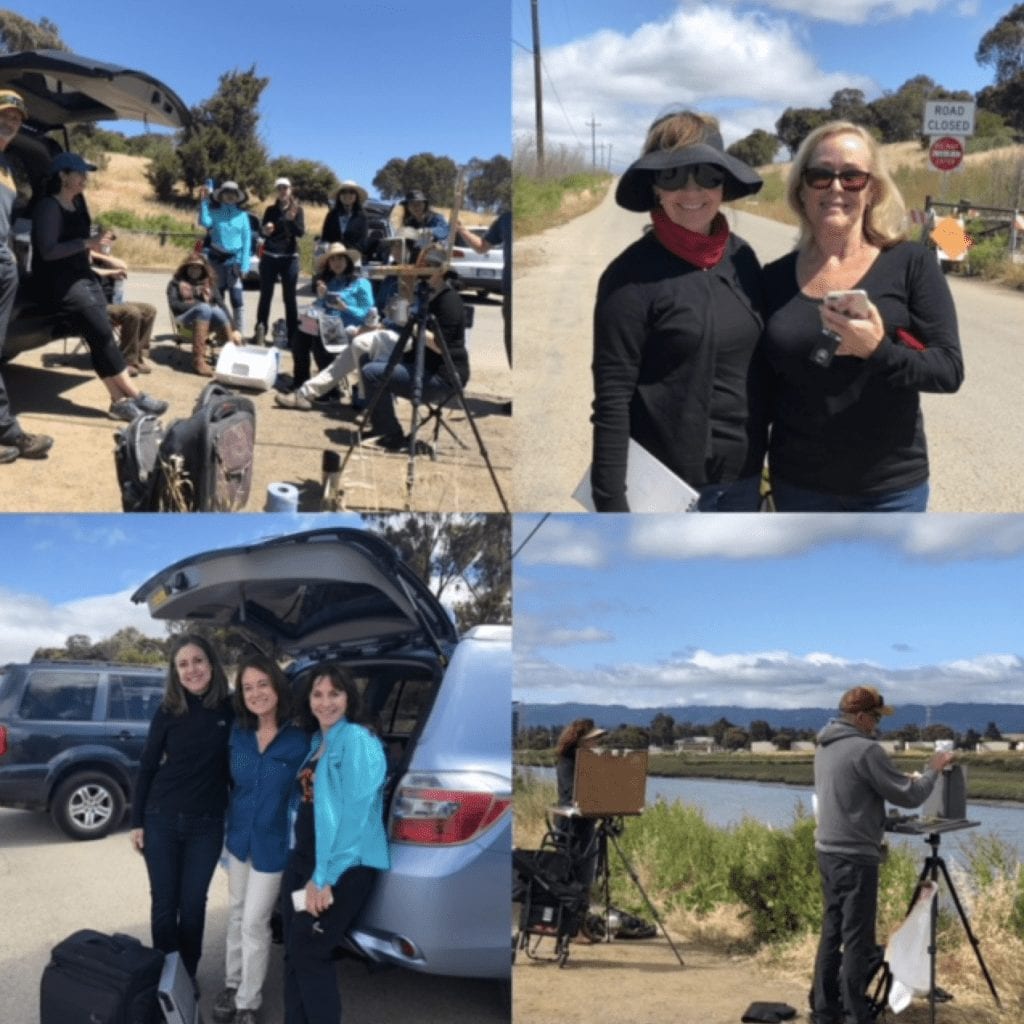
Another way to be a part of a collaborative circle is through an art organization. I am very lucky to be part of a collaborative team with the California Art Club (CAC). Paul Kratter and I are the co-chairs for the San Francisco Chapter of CAC, but the Club, its Executive Team, the other Chapter Chairs, and large number of Artist members make up this wonderful group. Like many other art organizations, CAC promotes exhibition opportunities, paint outs, demos, and workshops where artists can come together and share their knowledge. I could see the benefits of our collaborative circle at our last two SF Chapter paint outs. We had very senior artists and brand new artists both in attendance. I could see the excitement of the new artists as they met some of the more established artists they admired, and I could also see the pleasure and new energy the seasoned artists felt. The energy and chemistry in a good group is tangible, and can lead you to develop new ideas and techniques in your work, and most importantly, can help establish new friendships.
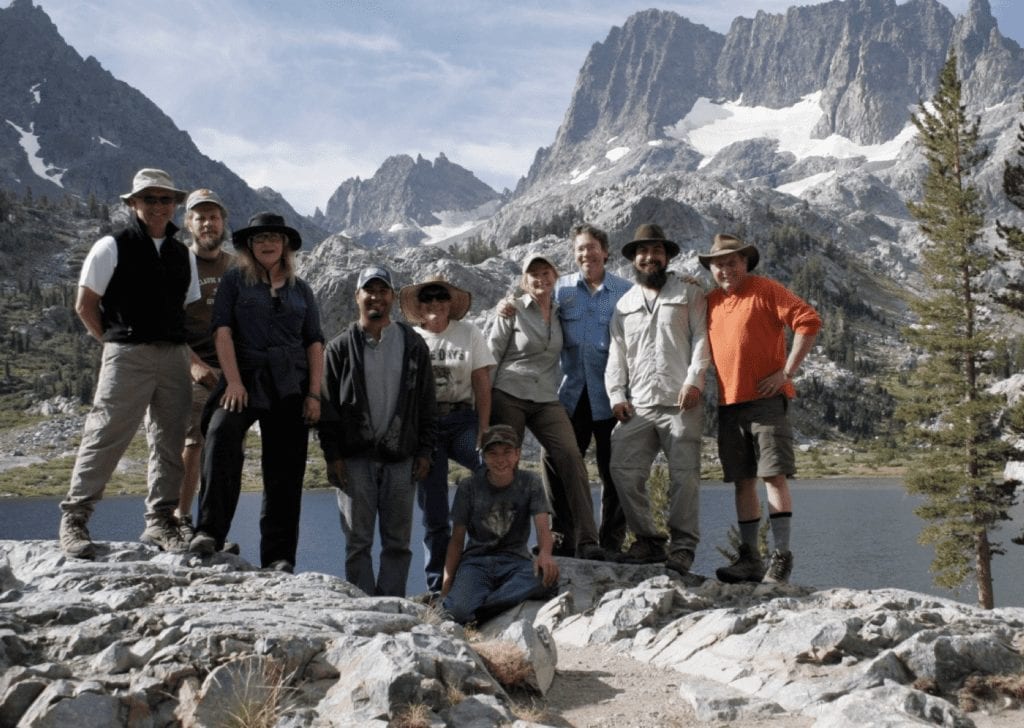
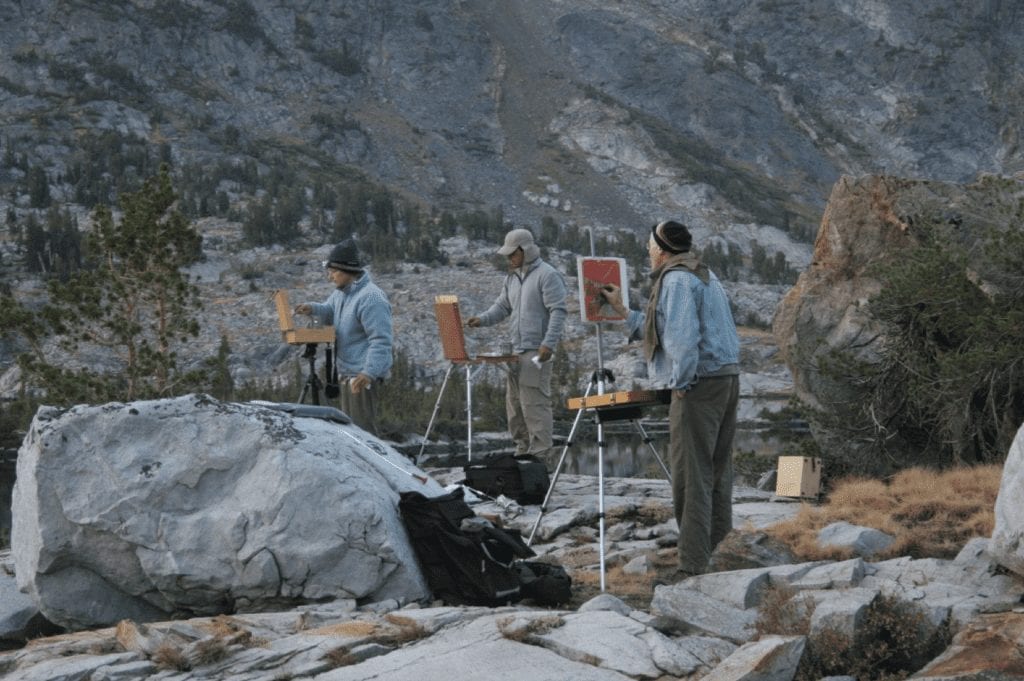
For the last 14 years Paul Kratter and Bill Cone have organized a pack trip to the Sierras. This group has its core group of artists, but has extended invitations to many other artists over the years. For a week you belong to the Sierra pack group. You share the same backpacking and painting experience, and are able to work alongside your fellow artists and exchange ideas and insights. It is a collaborative group!
Another benefit of being in a group is helping to maintain a healthy social life, which is essential to our well-being. This has been documented in countless sociological studies. People need to feel a sense of bonding – like belonging and connectedness. People frequently bond through common experiences and interests. According to Harvard T. H. Chan School of Public Health, “socializing over creative acts promotes more than happiness; studies indicate it promotes health, too.” The study reports that socially active elders experience a slower rate of memory loss than those who aren’t; “in fact, memory decline among the most integrated was less than half the rate among the least integrated.”
Art has significant psychological and social benefits, which can contribute to quality of life. So in addition to sharing your art expertise and experiencing a higher skill level, you gain a broader sense of well-being by being in a creative group.
You don’t have to teach a workshop, help lead an art organization, or participate in a backpacking trip to be in a collaborative group — you can begin with just one other artist who shares a common goal with you. When starting out, try and pick someone with similar goals who compliments your strengths and weaknesses. Borrowing from JFK, “always ask yourself what you can bring to a group instead of asking what the group can do for you.” Try to establish a set meeting time – like once a month – and stick to it. Your group could start out as a small plein air painting group with a focus on enjoying the outdoors and improving your ability to see colors more correctly outdoors. Be patient, have fun, be open to new ideas, and be flexible! You never know if history will write about your group like Monet’s.
Paint Masses Not Grasses!
Perhaps one of the more perplexing problems for new and developing landscape artists is how to effectively depict grasses. It’s easy for grasses to come out looking contrived or worse, like a bad hair transplant. I know, cuz I’ve been there, done that. Not the hair transplant, the contrived looking grasses. Here’s a workable solution for painting more natural looking grasses:
Try Painting Masses Not Grasses!
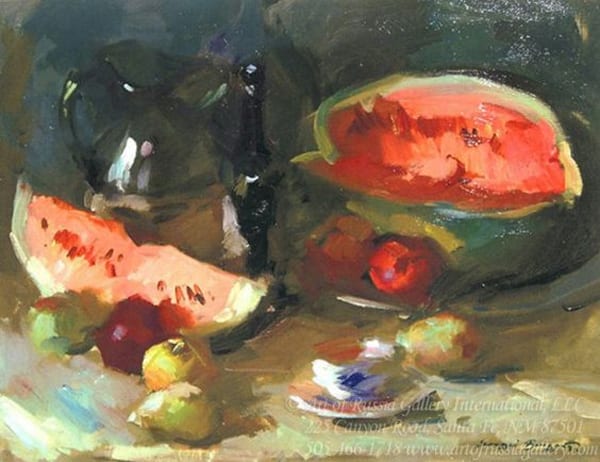
Sergei Bongart
In my painting, Low Country Marsh, the big mass on the right has the look and feel of grass even though individual blades are not really painted. But the irregularly shaped box with it’s vertical side and horizontal top is well defined. The sides are in shadow, the tops are in light. It’s the irregular, relatively soft juncture (edge) between tops and sides that gives the feel of grass. A little detail in the foreground mass helps the viewer infer detail in that mass, too. The same idea plays out in the background tufts of grass as well. The only detail is in the foreground and even there, it’s pretty sparse mostly suggested.
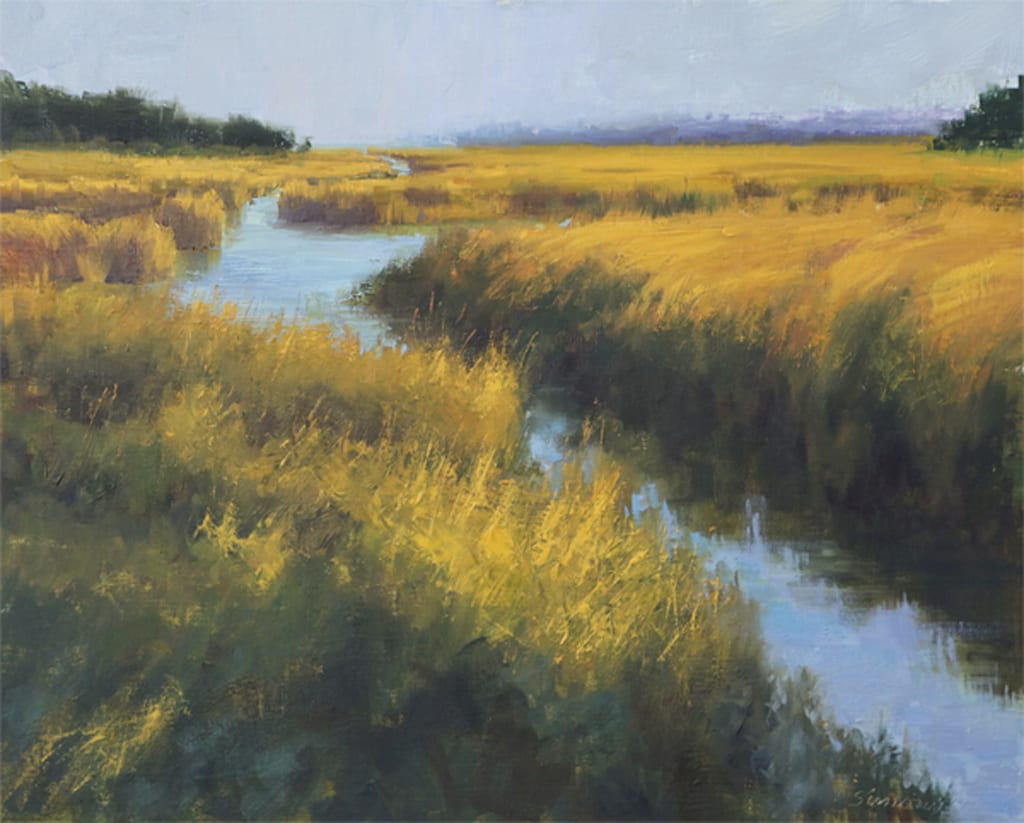
Robert Simone
16″ x 20″
In short, “Painting Masses Not Grasses”, means keeping all detail subordinate to the overall mass. Your viewer’s mind will fill in what’s lacking.
Choosing a New Direction
One of the biggest lessons I’ve been learning lately as an artist is to be patient with myself and the process. While patience often comes naturally with age and experience, it can also be developed intentionally in your art by forcing yourself to step back from a painting and allow it some time and space. In a previous blog post called “Let the Dead Paintings Die,” I discuss letting go of paintings for good. But in this post, I address giving the work a second chance. Sometimes it takes weeks or months before a painting can “tell” me what it needs. My recent painting, “A New Road,” is a great example of this.
I began this piece nine months ago. I am usually a very fast painter, especially when I am excited about the subject. Sometimes I can finish a large scale painting in a matter of 1-2 weeks… so nine months is a ridiculous amount of time for me. From the start, I was excited about the painting’s potential, but here’s the story of why it took me so long to complete it.
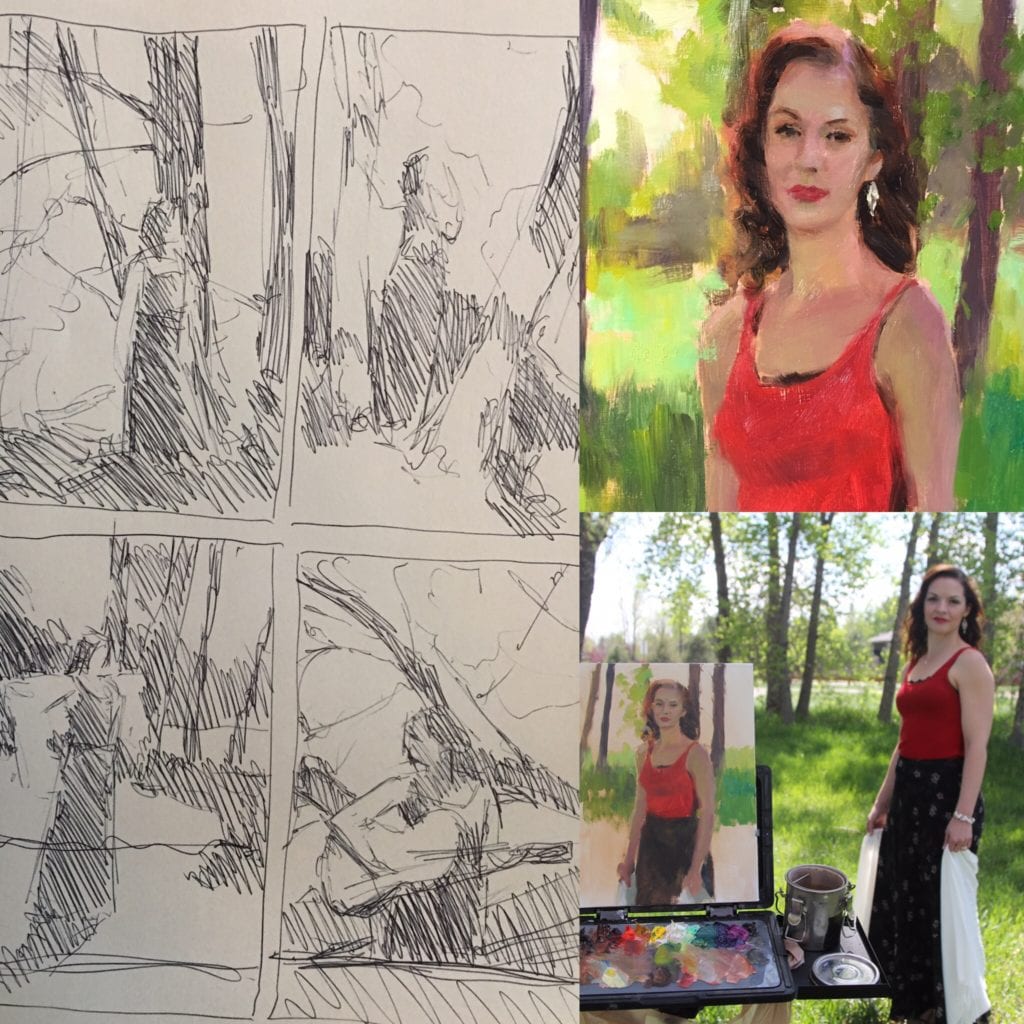
bottom right.
But execution of the idea proved to be disastrous. First of all… I’ve never been the kind of artist who delights in painting every single leaf (I am all about shortcuts!). Second, I’ve never attempted to paint a tree this large, in a portrait, with the tree having this much importance in the design. Given that my model, Corinne, had posed for me in the spring, the leaves were not even fully developed yet, they had an airy, wispy look to them—in other words—no structure. No defined shapes. It was a nightmare. At first, I attempted to paint every branch and leaf, still trying to “design” the diagonals and shapes as I went but becoming quickly exhausted and annoyed with it. I let the painting sit for a while, only working occasionally on the figure or the guitar, which both came much easier to me! Then, I decided to go back to my original location and re-shoot the tree. I went back twice, but the summer weather proved a nuisance each time, clouding over when I needed sunshine. Additionally, the tree had filled out and didn’t even look remotely close to the way it had in the spring. I found other trees with similar branch structures to photograph and use as reference.
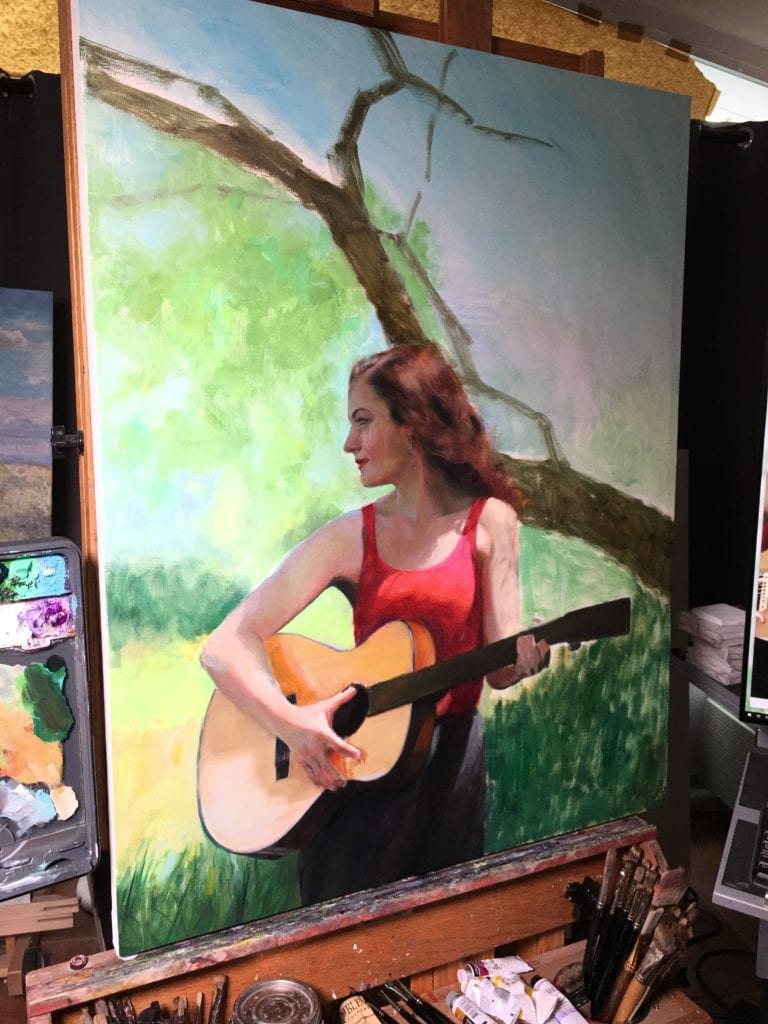
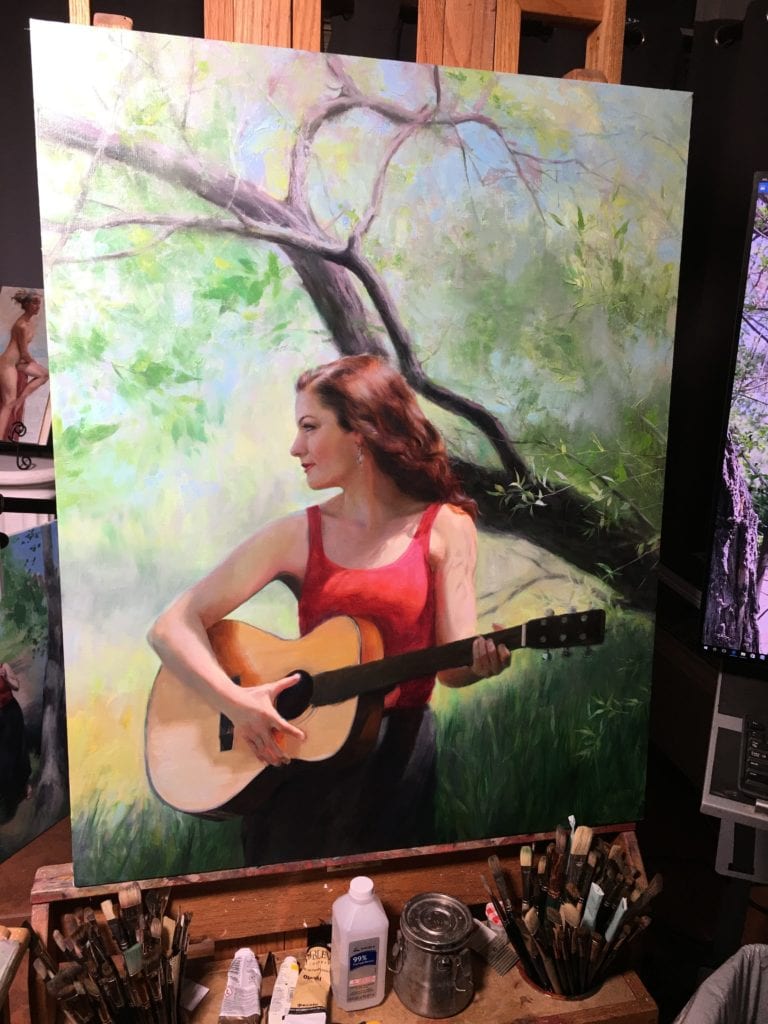
Above are some photos of the painting during its initial block in, and work on the tree.
Months went by. I kept trying one approach after another. I changed the shapes of the larger branches. I tried making everything lighter… then I tried making everything darker. I hated everything I was doing. As I type this, I realize how pathetic all of it sounds!
Finally… this past week, after another failed attempt at resuscitating that stupid tree, I mixed up a giant glob of pale yellow and painted over the entire background with a palette knife. It was invigorating. I was finally willing to let go of my initial design and allow the painting to take a direction of its own (hence, the painting’s title, “A New Road”).
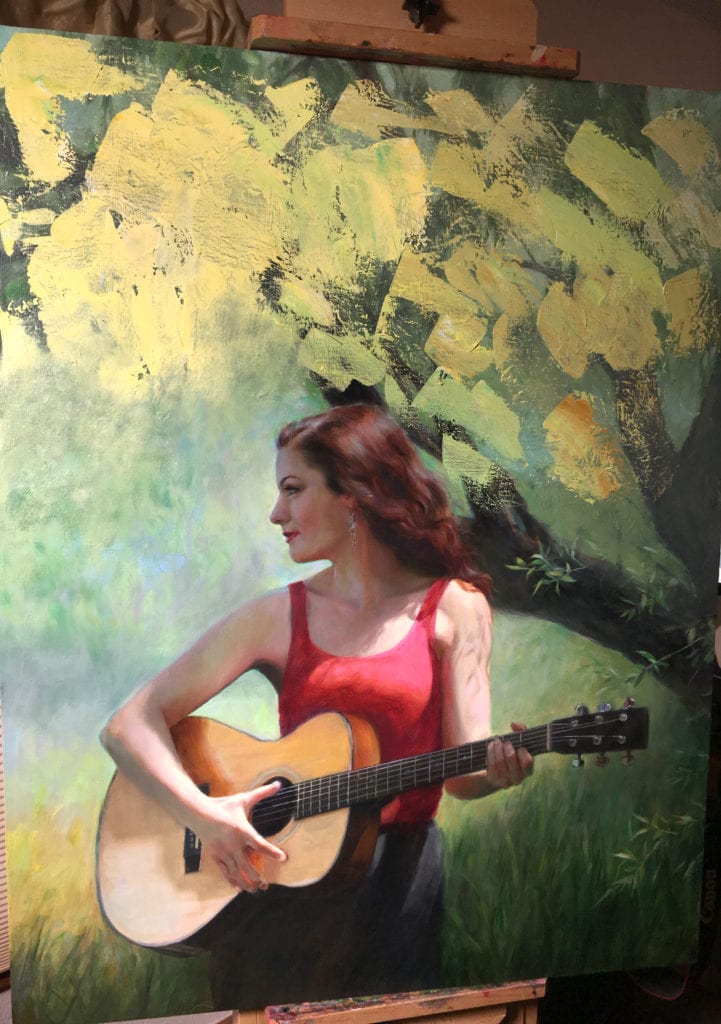
In summary, if a painting is worth rescuing, then do it, no matter how long it takes. And be willing to think beyond your initial concept. Let go of the thing that’s holding you back from making it great, and allow yourself creative freedom to do whatever it takes to bring the painting to the next level! In this case, I repainted the entire background, creating an impressionistic rendition of a sun-dappled path… and it fit the painting perfectly. Hopefully the lessons I learned from “A New Path” will prevent me from scrapping future paintings when all they need is a little time and patience.
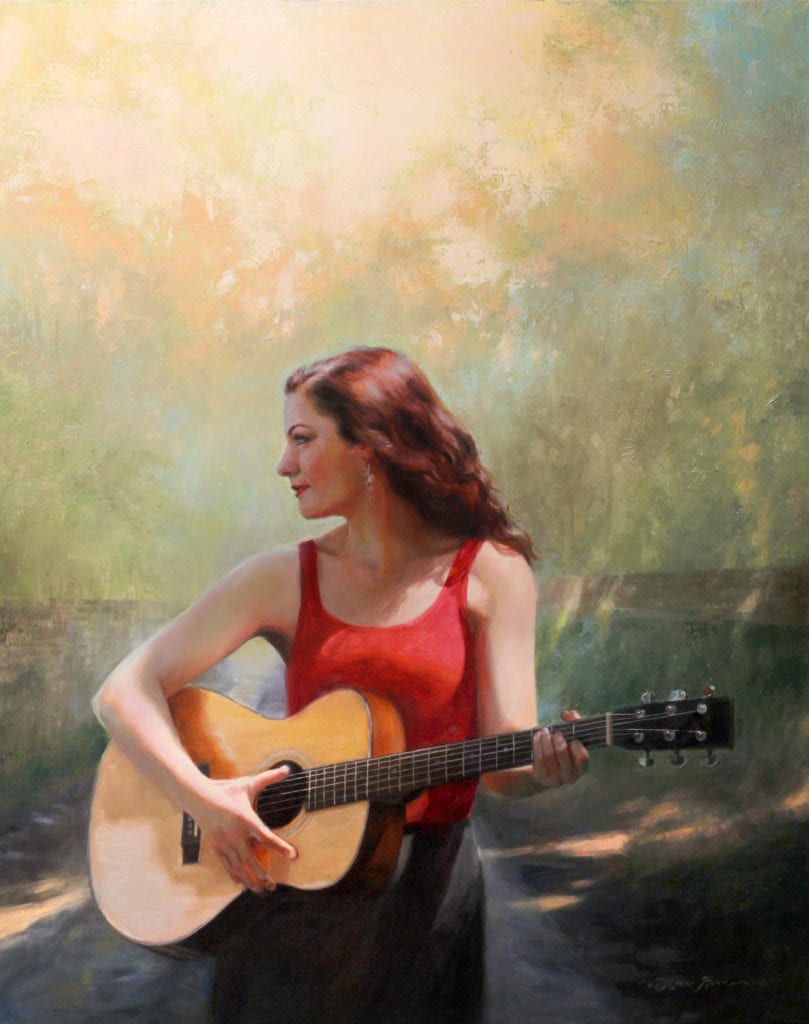
Anna Rose Bain
38″ x 30″
oil on linen (2018)
Alla Prima: Everything I Know About Painting (Richard Schmid) Chapter 1 “Good Ideas and Free Advice”, p. 19.